Advanced ML dimensions and emerging trends
 Instruction and application
 Complete
ML is transforming industries and making technological advancements like personalised recommendations, self-driving cars and intelligent chatbots possible. Building on your foundational understanding of ML and AI is essential to fully appreciate its impact.

Advanced task types
While the fundamental tasks of ML — classification, regression and clustering — form the foundation of many real-world applications, the field has evolved to tackle more complex and nuanced problems. As data becomes more complex and unstructured, these advanced ML tasks are becoming more important.
Dimensionality reduction
Dimensionality reduction is like creating a summary of your data while keeping the most important information. It's the process of converting high-dimensional data into a meaningful lower-dimensional format. The essential structure of the data is retained while the number of features is reduced.
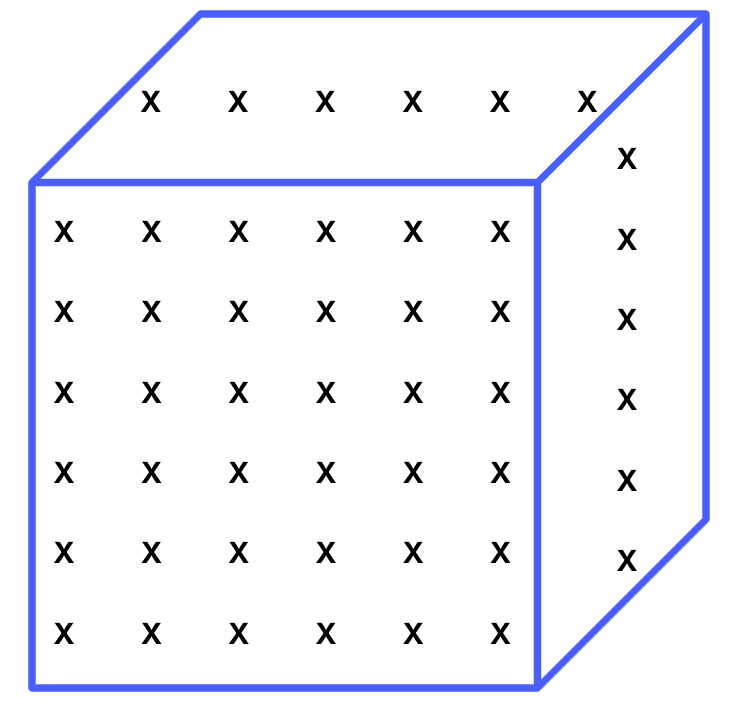 three-dimensional
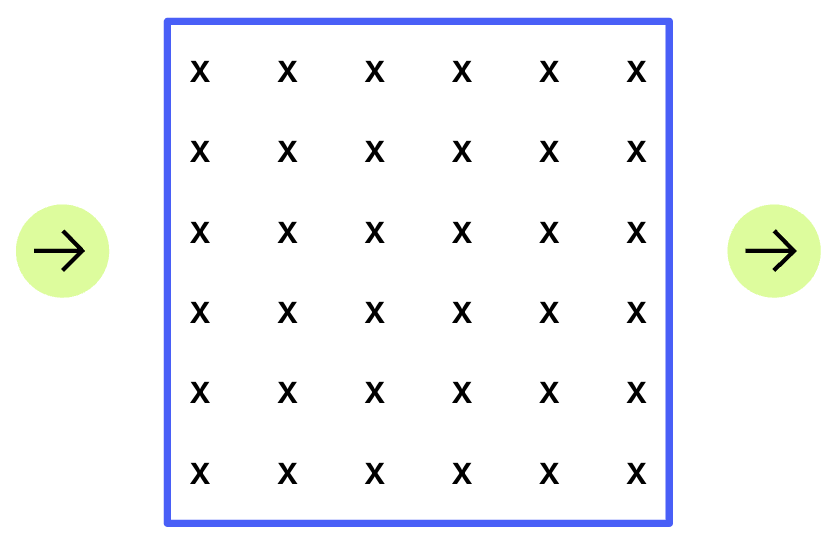 two-dimensional
 one-dimensional
| + Benefits | - Drawbacks |
|---|---|
| Improved model performance: Enhances accuracy and reduces overfitting by focusing on the most informative features. | Information loss: Important data characteristics may be lost, potentially affecting model accuracy. |
| Computational efficiency: Decreases training time and resource consumption by reducing the number of features. | Feature interpretability: Reduced dimensions might lack intuitive interpretation, complicating feature understanding. |
| Noise reduction: Helps eliminate noise, providing a cleaner dataset for analysis and improving model reliability. | Dependency on data type: Effectiveness can vary depending on the nature and dimensional structure of the data, requiring careful technique selection. |
Generative modelling
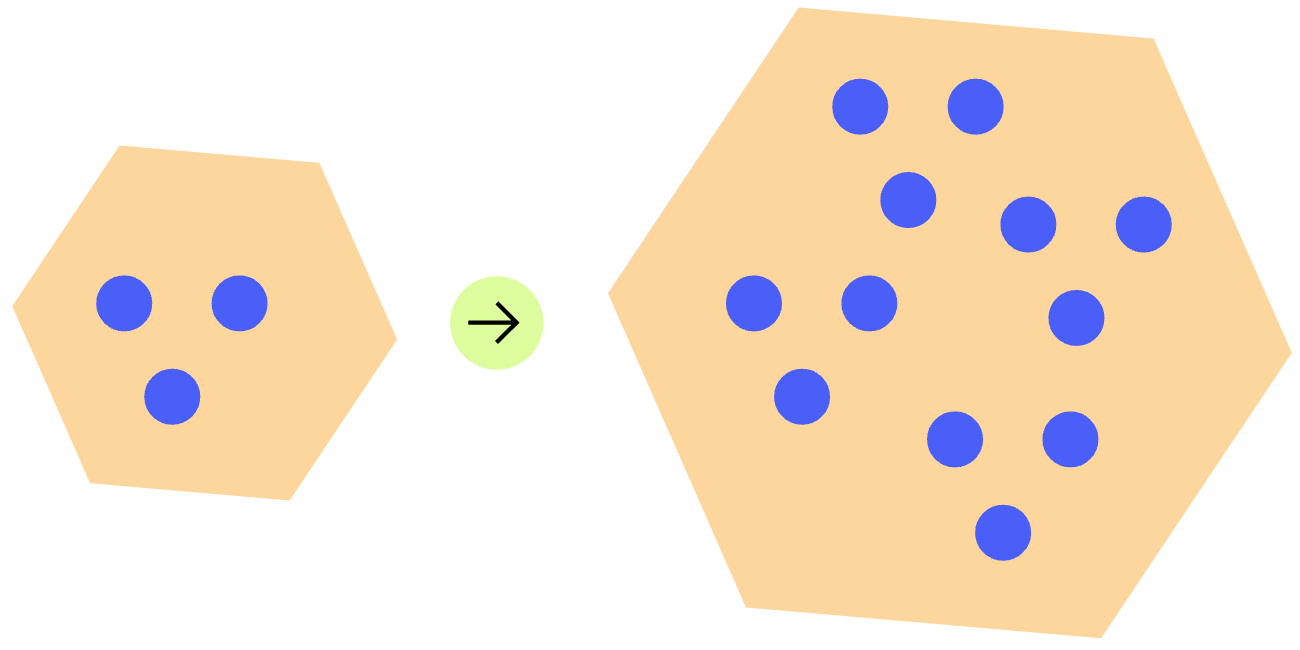
Generative modelling goes beyond discriminative tasks like classification and regression. In generative modelling, new data points are created by understanding the underlying distributions of data points in the dataset. The goal is to generate new samples that resemble the training examples, enabling applications like image synthesis, data augmentation and anomaly detection.
| + Benefits | - Drawbacks |
|---|---|
| Data augmentation: Generates new data samples, enhancing diversity and volume in training datasets. | Computational intensity: Requires significant computational resources, making model training complex and costly. |
| Advanced applications: Enables novel applications like image synthesis, style transfer and text generation. | Quality control: Maintaining quality and realism in generated outputs is challenging and can result in artifacts. |
| Anomaly detection: Effective at identifying outliers by analysing deviations from generated data trends. | Interpretability issues: The inner workings of generative models are often opaque, complicating result interpretation. |
Ranking and recommendation
In many applications, such as search engines, e-commerce platforms and content streaming services, the goal is to rank a set of items or provide personalised recommendations to users. Ranking models aim to learn a scoring function that assigns relevance scores to items based on user queries or preferences.
| + Benefits | - Drawbacks |
|---|---|
| Personalisation: Provides tailored content or product recommendations, enhancing user experience and engagement. | Data bias: Recommendations can reinforce existing biases present in the data, affecting diversity and fairness. |
| Increased revenue: Effective recommendations can lead to higher conversion rates and sales, particularly in e-commerce and media streaming platforms. | Cold start problem: Systems struggle to make accurate recommendations for new users or items due to a lack of data. |
| User retention: Keeps users engaged by providing relevant content, fostering loyalty and return visits. | Complexity in model tuning: Requires extensive parameter tuning and contextual understanding to improve recommendation accuracy. |
Advanced model types
It's time to expand your understanding. Let's explore advanced model types that are revolutionising the field of ML and AI and driving innovation across industries. Understanding these advanced model types will expand your ML toolkit and enable you to tackle even more complex business challenges.
Neural networks
Neural networks are inspired by the structure of the human brain, composed of layers of interconnected nodes, or ‘neurons’, that work together to process data. Each node takes input from the previous layer, applies a transformation and passes the output to the next layer. The final output is used to make predictions or classifications.
How neural networks work
The neural network adjusts its internal parameters (weights and biases) based on the data it processes. During training, the network uses an optimisation algorithm (such as backpropagation) to minimise the error between its predictions and the actual labels. Over time, this iterative process enables the network to learn complex patterns.
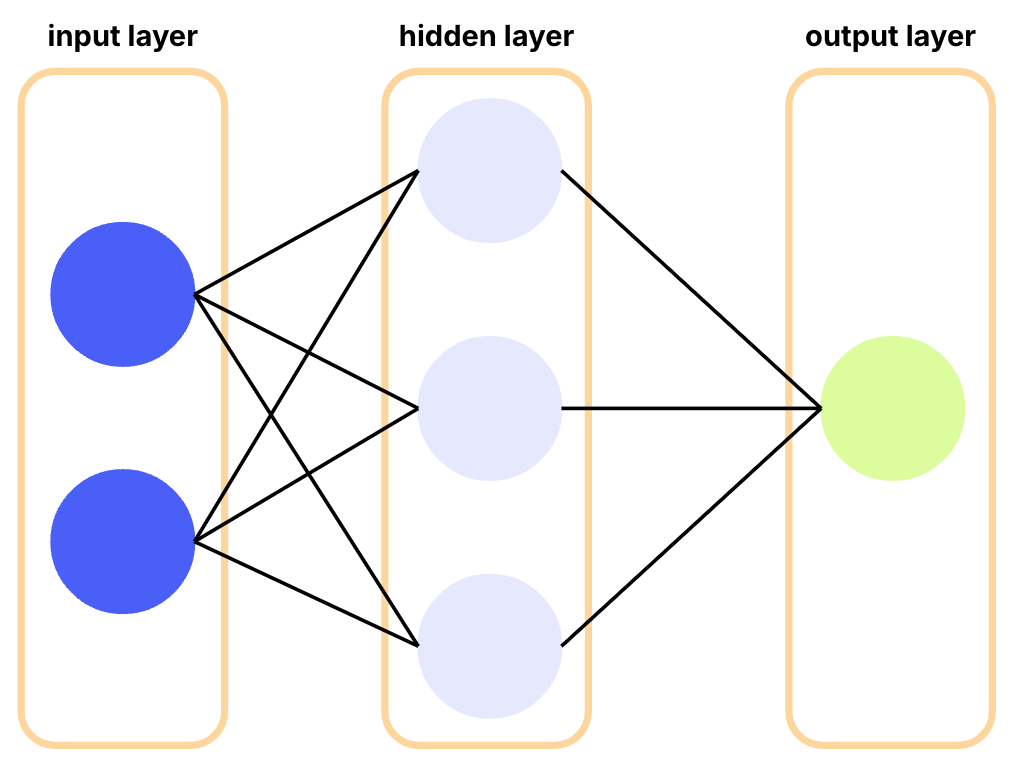
- Input layer: Receives raw data (e.g. images, text, audio).
- Hidden layers: Multiple layers of artificial neurons extract patterns and relationships.
- Output layer: Generates predictions or classifications.
Neural networks applications and challenges
Neural networks are foundational in tasks like image and speech recognition, where traditional algorithms may struggle. For example, in facial recognition software, a neural network can learn to identify people based on millions of images, capturing intricate patterns that distinguish one person from another.
Challenges
- Interpretability: Neural networks are often considered ‘black-box’ models because it can be difficult to understand how they arrive at a decision.
- Training time: Neural networks require a large amount of data and computational resources, making training time-intensive.
Deep learning
Deep learning is a subset of neural networks that involves using multiple layers (hence the term ‘deep’) to process and learn from data. While traditional neural networks have a few layers, deep learning networks use many layers, allowing them to learn increasingly abstract features from raw data.
How deep learning works
In deep learning, each successive layer of the network learns progressively higher-level features. For example, in an image recognition task, the lower layers might learn to detect edges, while the deeper layers might identify shapes and objects. This hierarchical approach enables deep learning models to achieve remarkable performance on tasks like image classification and natural language processing.
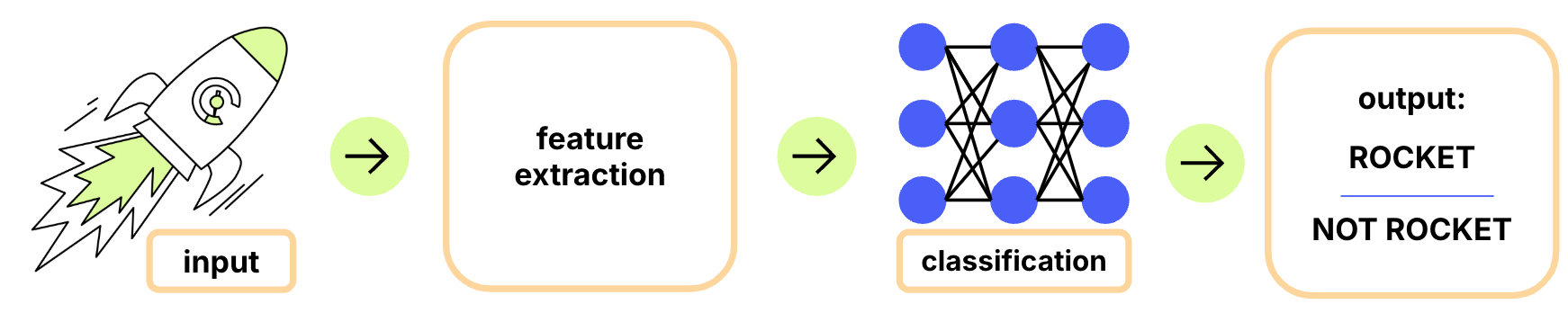 ML process
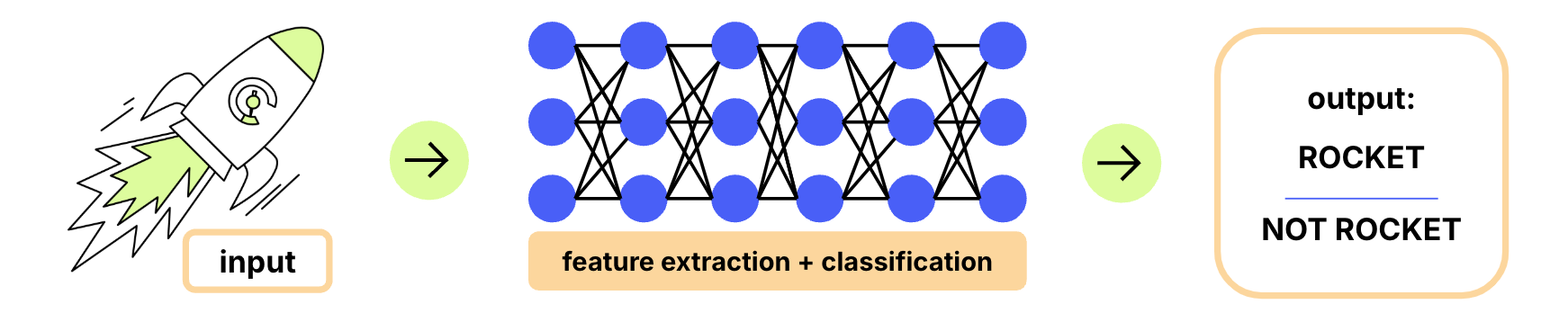 Deep learning process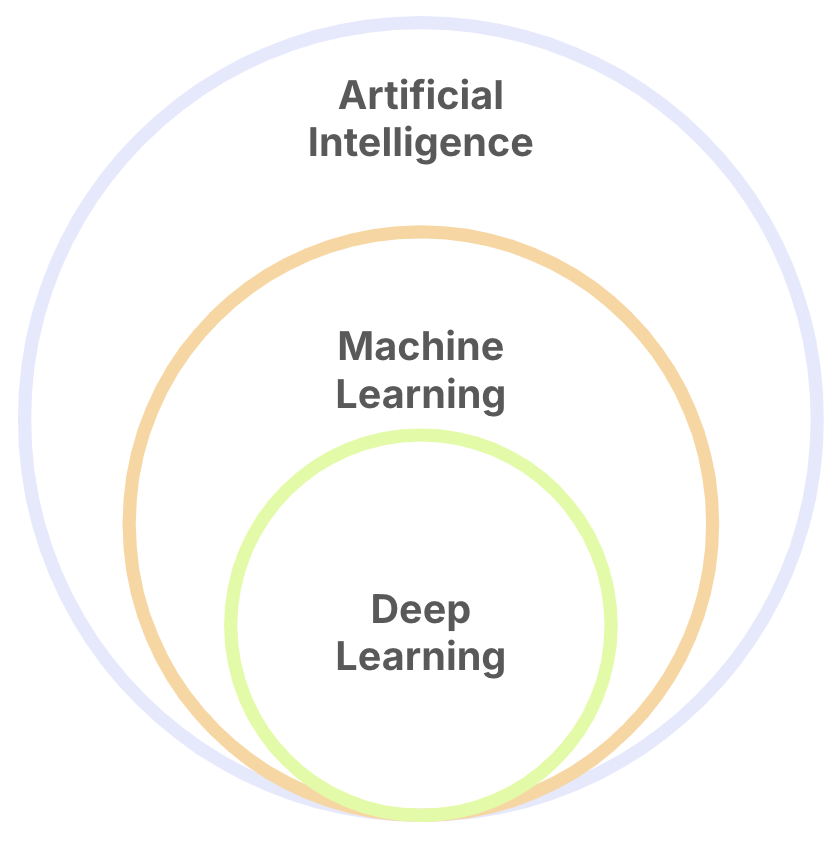
Deep learning applications and challenges
Deep learning powers technologies like self-driving cars, where it processes sensor data (images, lidar, radar) to make real-time driving decisions. It’s also used in voice assistants (e.g. Siri, Alexa) to understand and generate human speech.
Challenges
- Data dependency: Deep learning models require vast amounts of data to perform well, which may not always be available.
- Computational resources: Training deep learning models demands significant computing power, often requiring specialised hardware like graphics processing units (GPUs).
Natural language processing (NLP)
NLP is a branch of AI focused on enabling machines to understand, interpret and generate human language. Unlike traditional ML models, which work with structured data (e.g. numbers and categories), NLP deals with unstructured data like text and speech, making it particularly challenging.
How NLP works
NLP models often use techniques like tokenisation (splitting text into smaller units), part-of-speech tagging (identifying grammatical components) and named entity recognition (extracting meaningful entities like names or locations). Advanced NLP models, such as transformers, are able to capture complex relationships between words and context, enabling them to understand the meaning behind sentences.
NLP applications and challenges
NLP is widely used in applications like chatbots (e.g. customer service automation), sentiment analysis (analysing customer reviews or social media posts), machine translation (e.g. Google Translate) and text summarisation.
Challenges
- Ambiguity: Human language is inherently ambiguous, with multiple meanings for many words and phrases depending on context.
- Computational complexity: Advanced NLP models, especially those based on deep learning, require significant computational resources to train and fine-tune.
Emerging ML trends
The field of ML is constantly evolving, with new techniques and advancements pushing the boundaries of what’s possible. Some of these latest trends include:
- Explainable AI (XAI): The push for models that are transparent and explainable to humans, especially in high-stakes fields like healthcare and finance.
- AutoML: The automation of the ML pipeline, making ML more accessible to non-experts by automating tasks like model selection and hyperparameter tuning.
- Federated learning: A method where models are trained across decentralised devices, allowing for privacy-preserving ML without centralising data.
- Quantum ML: An emerging field that aims to leverage quantum computing to solve problems too complex for classical computers.
Chatbots using NLP
RAG based systems
Agentic AI