Horizon scanning and self-directed learning
 Instruction and application
 Complete
As a professional in a rapidly evolving field, it's crucial to develop the skills that will enable you to stay at the forefront of ML and AI throughout your career. In this section, we'll dive into horizon scanning techniques and strategies for self-directed learning.
Fundamentals of horizon scanning
Horizon scanning is a proactive method of gathering, analysing and interpreting information about future trends, technologies and potential disruptions. By regularly scanning the horizon, professionals can better anticipate changes, identify emerging opportunities and avoid potential risks.
- What is horizon scanning? Systematic monitoring of the environment to identify emerging trends, technologies and innovations.
- Why is it important for ML/AI? Technologies advance rapidly; horizon scanning allows you to stay informed about new tools like quantum computing or the ethical implications of AI systems.
Information sources for ML/AI trends
Effective horizon scanning relies on diverse information sources to get a well-rounded view of emerging trends.
| Source | Why it's useful |
|---|---|
| Advocates | Think tanks or pressure groups promote ethical use and benefits of AI in healthcare, education, and society. |
| Academic research | Universities and conferences (NeurIPS, CVPR) present new algorithms before they reach mainstream industries. |
| Industry reports | McKinsey, Deloitte, and Gartner provide insights into market directions and sector-specific AI adoption. |
| Regulatory bodies | Monitoring standards (e.g., GDPR) helps anticipate the impact of new laws on AI data privacy. |
| Startups | The breeding ground for cutting-edge ideas and next-generation technologies. |

Tip: Automated Alerts
Set up automated alerts using tools like Google Alerts, Feedly or AI-specific newsletters (e.g., The Batch by DeepLearning.AI) to track breakthroughs and thought leaders effortlessly.
Building a horizon scanning routine
Developing a consistent routine is essential for keeping up with rapid changes. This routine ensures you are continually collecting data, assessing trends and adapting.
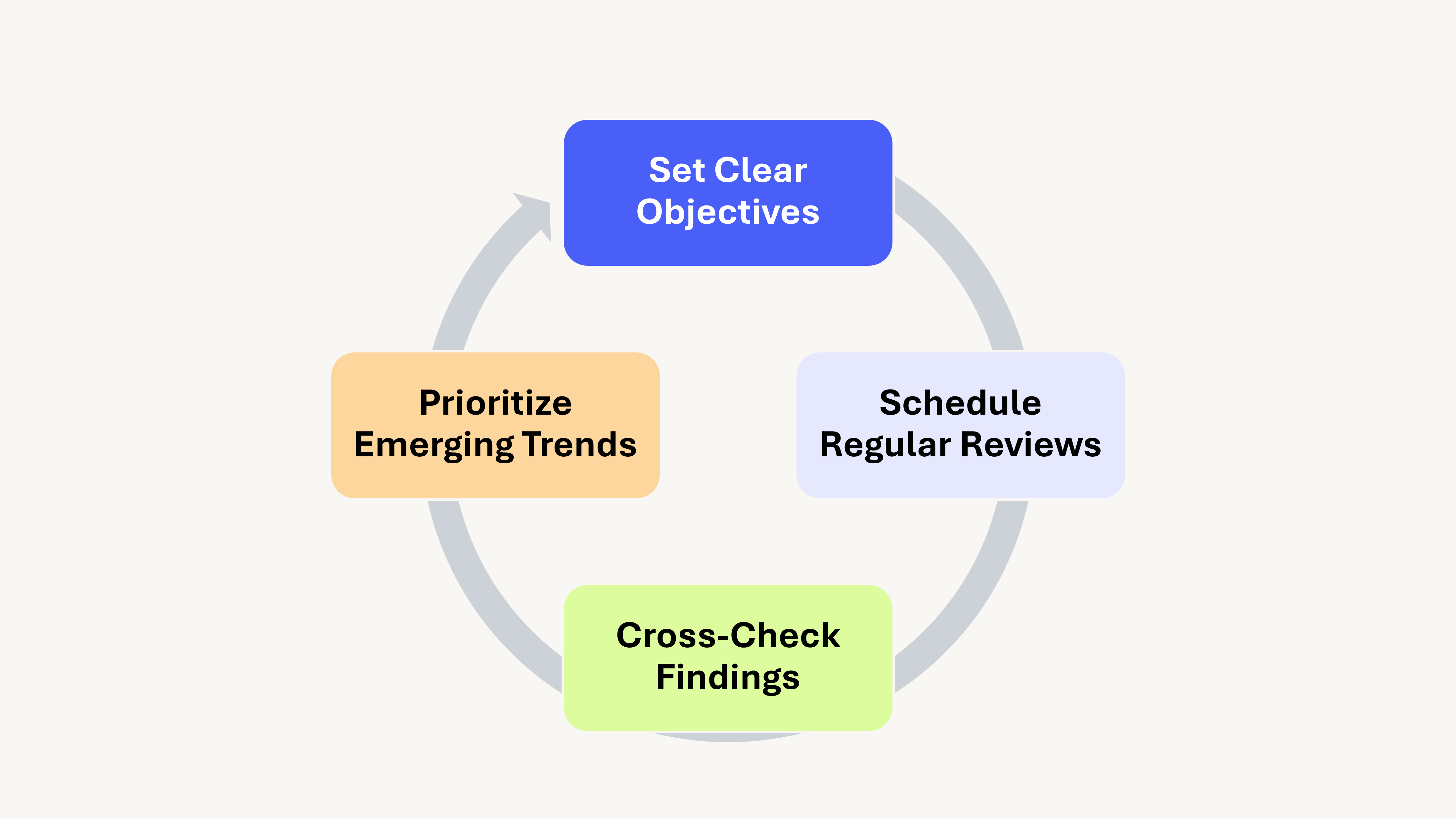
- Set clear objectives: Define what you are trying to achieve (e.g., looking for new technologies to adopt).
- Schedule regular reviews: Schedule weekly or monthly checks to stay on top of important signals.
- Cross-check findings: Review trends from multiple perspectives to form an accurate picture.
- Prioritise emerging trends: Focus on the trends with the most significant implications for your work.

Action item: Pause and think
Reflect on the following to help reinforce your understanding of horizon scanning and self-directed learning.
Type your reflection here...
Type your reflection here...