Securing and confirming approval
 Unit
Unit In Progress
Few things are more frustrating than hearing ‘yes’ in a meeting — only to find out weeks later that the decision wasn’t official. Without formal confirmation, even the best ML projects risk stalling.
Getting a verbal ‘yes’ isn’t enough. For a project to move forward, approval must be clear, documented and communicated to all relevant stakeholders. This ensures everyone knows the project is ready for the next phase and prevents scope creep or derailment.

Formal approval
A handshake is not enough to protect a project. Formal approval provides a clear trail for governance and compliance.
Common approval methods:
- A signed document: A physical or digital signature on a formal handover document. Common in highly regulated industries.
- A confirmation email: A written message from an executive sponsor. Practical and widely used.
- A project management record: Approval logged in tools such as Jira, Trello, or Confluence.

Practical examples
- Financial services: ML models cannot move to production until the compliance officer sends a formal approval email.
- Tech start-up: Steering committee records approvals directly in Jira, visible to engineering, product, and operations.
Post-approval communication
Securing approval is just the first step. You must communicate that decision broadly. Effective post-approval communication should:
- Summarise the decision: Clearly state that approval was granted.
- Restate next steps: Link back to the handover checklist.
- Confirm roles: Reinforce who owns what moving forward.Sample Summary Email:
Subject: Approval granted — churn prediction model deployment
The steering committee has approved the churn prediction model for implementation. Technical handover will begin next week, with deployment milestones set for Q3. Please refer to the attached checklist for your team’s responsibilities.
Practical steps for confirmation
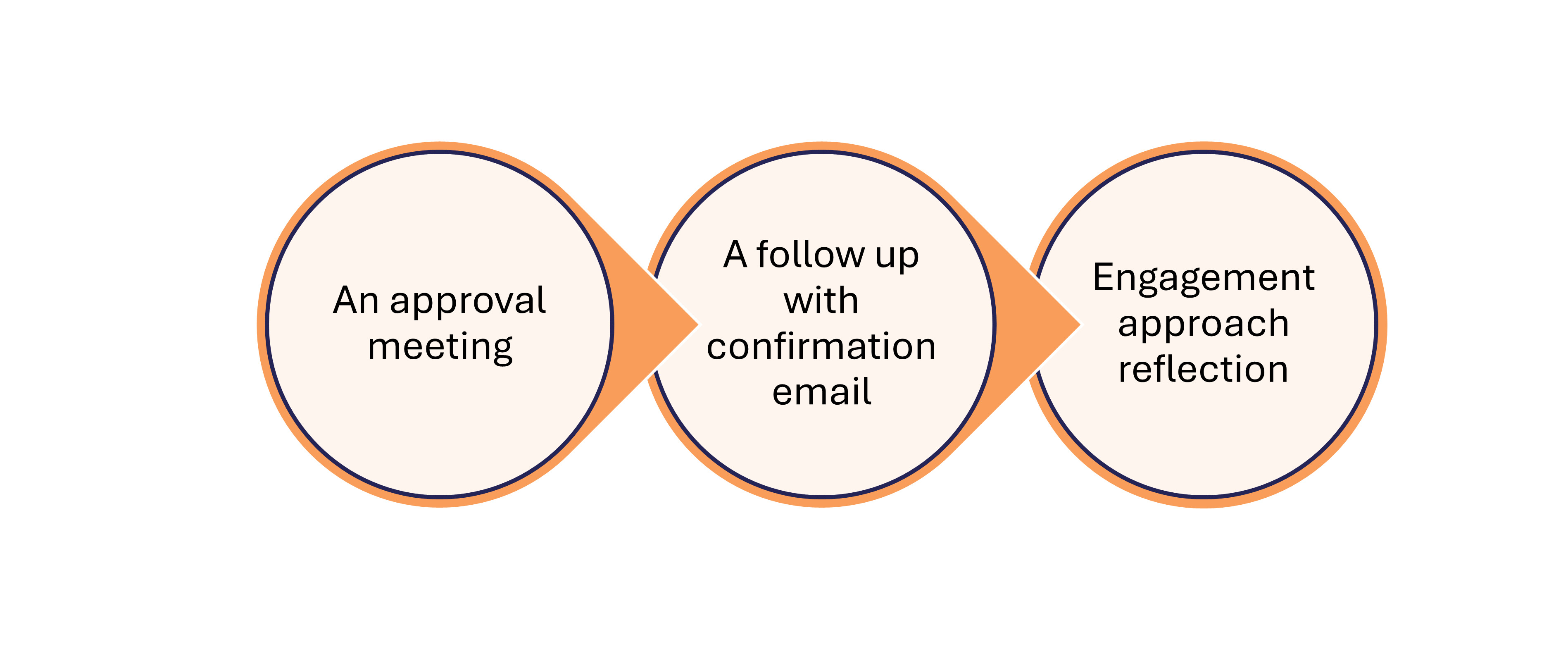
Securing approval involves three key actions:
1. The approval meeting
Use your handover documentation as the centrepiece. Walk stakeholders through highlights and risks, then make an explicit ask for approval.
2. The confirmation email
Immediately summarise the decision in writing to create a paper trail and remove ambiguity.
3. Engagement reflection
Reflect on what worked and where gaps existed to strengthen your approach for future projects.

Action item: Pause and reflect
Think about your last project approval process:
- How was approval documented?
- Were all stakeholders properly informed once approval was given?
- What would you do differently next time?
Approval documentation:
Stakeholder communication:
Process improvement: