Stakeholder identification and planning
 Unit
Unit In Progress
Every ML project has one hidden variable that can make or break success: People. Stakeholders, whether enthusiastic champions or cautious gatekeepers, will determine if your model ends up deployed, delayed or dismissed.
A stakeholder is anyone who has an interest in or is affected by your project. Identifying them early is not just nice-to-have, it’s critical. Without a clear picture of who holds influence, you risk building technically sound solutions that fail to gain traction.

The stakeholder matrix
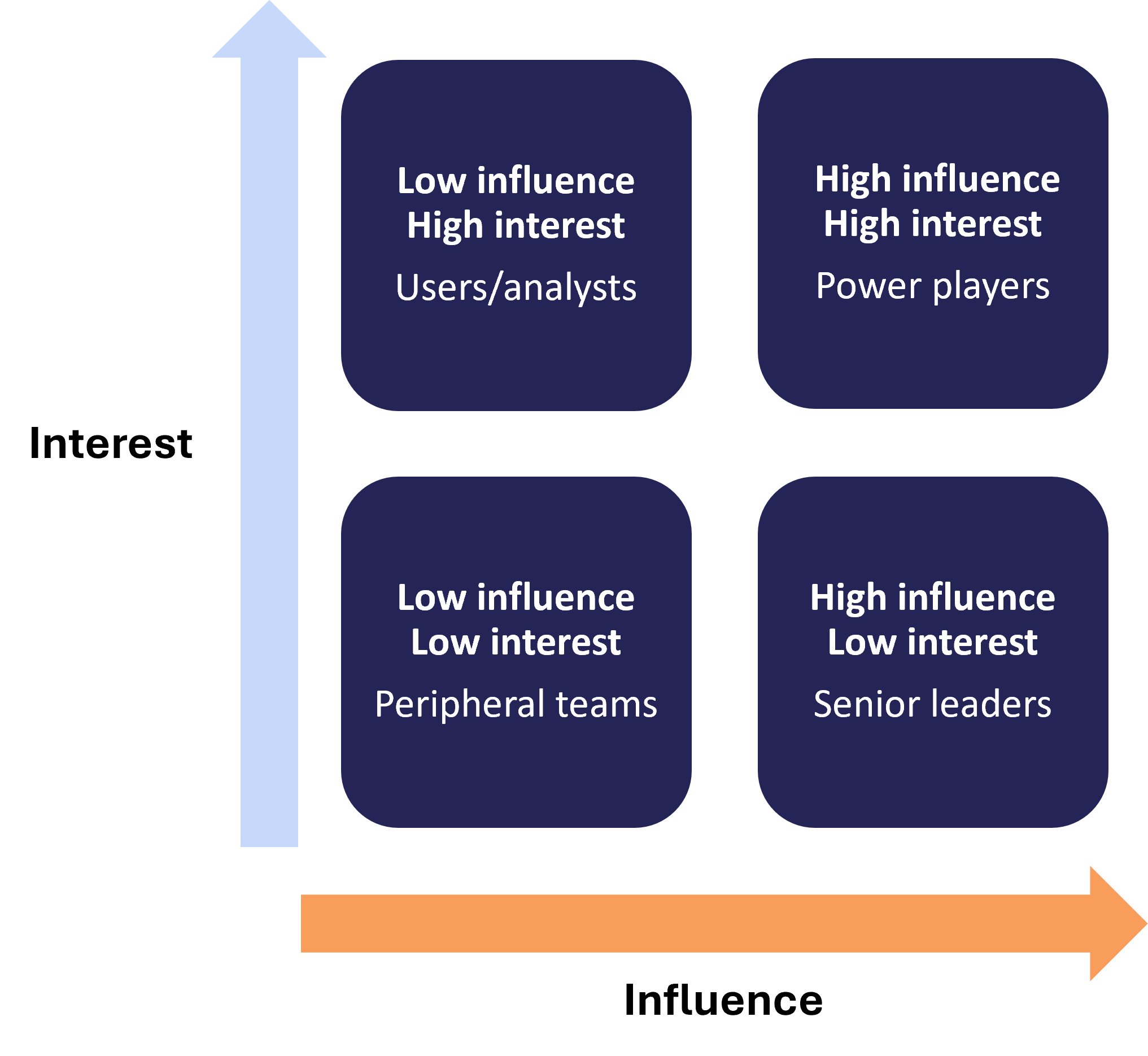
Not all stakeholders carry the same weight. organizr people based on two factors:
Influence:
How much power they have to shape or block your project.
Interest:
How invested they are in the project’s outcome.
Mapping Influence & Interest
High influence/high interest:
Your project ‘power players’. Keep them close and engaged.
High influence/low interest:
Strategic leaders who expect visibility but not details. Keep it short.
Low influence/high interest:
End users or technical contributors. Engage early for adoption and feedback.
Low influence/low interest:
Peripheral teams. Monitor them with basic awareness.

Key takeaway
Stakeholder mapping isn’t about labelling people, it’s about focusing your time and communication where it matters most.
Communication plan
Turning insight into action ensures you’re communicating in the right way, at the right time, with the right message. A good plan outlines:
Who
you need to communicate with.
What
information they need (detail level).
When
they need it (frequency).
How
you will deliver it (channel).
Health care example: Mapping & Tailoring
1. Stakeholder matrix
| Low influence | High influence | |
|---|---|---|
| High interest | Radiologists | Chief Medical Officer (CMO) |
| Low interest | Finance department | Hospital IT director |
2. Communication plan
CMO:
Monthly clinical performance reports and short review meetings.
Hospital IT director:
Bi-monthly technical checklist on integration, uptime, and compliance.
Radiologists:
Quarterly interactive workshops for system testing and workflow feedback.
Finance department:
Quarterly financial summary highlighting ROI.
Pro tip
Communication plans should be living documents. As stakeholders’ priorities or influence shift, update your plan to reflect new realities.

Action item: Practice stakeholder planning
You’re working on different ML projects, each with multiple stakeholders. Use what you’ve learned about the matrix and communication planning to decide the best way forward.